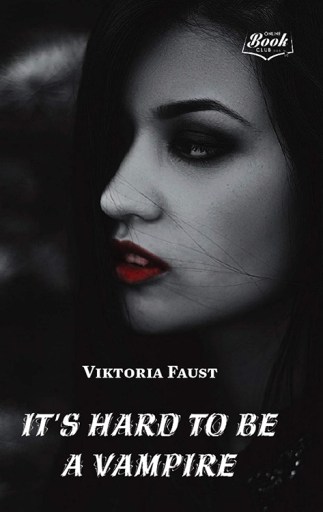
 Author – Viktoria Faust
It’s Hard to Be a Vampire by Viktoria Faust is not a collection of vampire stories. However, the following subjects appear throughout the book as well as in vampire tales: murder for personal gain, the allure of the dark side, death, suicide, obsession, religion, and blood as a life-giving force. Vampires are central to just three of the nine pieces in this collection. Themes and subject matter vary throughout. The events and descriptions are often gruesome but not scary. The tales in this book deliver neither the spine-tingling fear nor the edge-of-your-seat suspense central to the horror genre. They are, however, interesting.
Viktoria Faust presents numerous ideas, themes, and subjects within a short story collection of fewer than ninety pages. Two plots center around suicide. Another story describes a woman’s grieving process. The struggles and resulting anger felt by misunderstood artists recur four times. The most engaging pieces toy with our perceptions of evil; they urge us to consider whether what we accept or reject as evil makes sense. The first story provides an entertaining example. The antagonist in “It’s Hard to Be a Vampire” is an arrogant, callous, murderous vampire who fat-shames our heroine. Oddly, it is this despicable creature’s fat-shaming that is disturbing. We can accept his cruel, bloodthirsty behavior, but not that. “Gallery of Horrors” juxtaposes vulgar representations of shocking acts with horrific deeds. The story’s longer length provides the opportunity for better character development. A mediocre painter compensates for his lack of talent by painting disturbingly provocative religious scenes. The gallery’s patrons, his uncle, and his models are horrified. Readers are privy to his vitriolic internal monologues where our misunderstood artist projects his mediocrity onto those around him. But on his way home from the exhibition, he makes a gruesome, disgusting discovery. As a result, he becomes a highly praised and financially successful artist. I won’t spoil the irony by providing further details. However, some readers may find the story distressing from beginning to end.
Although numerous ideas in It’s Hard to Be a Vampire capture the imagination, the writing is frequently unemotional and lackluster. When reading the first scenes of several stories, I felt confused. Some pieces were so short and simple that they were over before I could appreciate what was happening. I found this irritating. Others contain well-worn plots related matter-of-factly with almost no character development. The second vampire tale is an example. Its plot is all too familiar: An evil-fighting hero engages in an internal battle against his desire to become evil. When Luke Skywalker waivers, we are on edge, hoping he does not succumb. I kept hoping the slayer in “Do Vampires Dream of Slaughtered Sheep?” would allow someone to bite him just to end the story.
The idea presented in “That Bloody Useless Bloodless Body” contains potential as Noir fiction. If an author were to rewrite it, perhaps the main character would be obsessed with covering up his initial act of manslaughter. Consequently, he would commit horrifying crimes. His inevitable demise would accelerate when he becomes terrified that the bloodless body is truly a vampire. However, as written, “That Bloody Useless Bloodless Body” isn’t horrifying or remarkably entertaining.
Because the flat writing does not draw me into the stories, I rate It’s Hard to Be a Vampire three out of five stars. Most pieces present thought-provoking ideas; therefore, any of them would be suitable as fillers for a reader’s spare moments. This book is only recommendable to people who are not bothered by gory details, suicide, or sacrilegious ideas. Furthermore, my recommendation comes with the caveat that these horror stories are neither suspenseful nor frightening, but they are intriguing.
Discover more from Ms Teres Reviews
Subscribe to get the latest posts sent to your email.
 Ms Teres Reviews
Leave a comment